Cancer, Diet & Wellness Trends: What Actually Matters During Treatment
What helped me and what just fed my fear
I’ve been spending quite a bit of time on Reddit again lately, especially in breast cancer communities. And I keep seeing the same questions come up over and over again.
Questions like:
Should I cut sugar completely?
Should I fast during chemo?
Is juicing better than eating?
Am I making things worse if I don’t follow a strict “anti-cancer diet”?
Am I missing something that could improve my outcome?
I remember being in that exact place.
Right after diagnosis and before treatment really starts, there’s this phase where you feel incredibly exposed. You suddenly realise how little control you actually have, and naturally, you start looking for ways to take some of it back.
For me, that quickly turned into going down the wellness rabbit hole. Suddenly my feed was full of people talking about detoxes, fasting, anti-cancer supplements, cutting sugar, “healing protocols,” and stories from people who seemed very sure that they had figured out something the medical system wasn’t telling us.
And I get it. When you’re scared, certainty is incredibly attractive.
This is the blog post I wish someone had written for me back then. Never as medical advice. Not as someone claiming to have all the answers. But as someone who has been through it, spent way too many hours researching and spiralling online, and eventually learned to separate what genuinely supported me from what mostly fed my anxiety.
During treatment, your body needs support, not punishment.
One of the biggest things I wish more people talked about is that cancer treatment is physically demanding. Chemotherapy is not just “fighting cancer.” Your body is under enormous stress while also trying to repair healthy tissue, maintain muscle mass, regulate hormones, recover from inflammation, and simply keep functioning. And very often patients are under sooo many more meds (don't get me started about Zoladex...)
This is not the time to aggressively restrict, detox, or punish your body. And yet, so much online wellness advice pushes exactly that.
Juicing instead of eating full meals.
Extreme fasting.
Cutting out entire food groups overnight.
Obsessing over every gram of sugar.
Trying to become the “perfect” cancer patient.
I understand why people do it. 'Ohnmacht' makes us reach for control. And looking back, I am so glad that I understood how important the basics actually were. Not the glamorous wellness basics. The boring ones.
Eating enough.
Getting protein in.
Drinking enough water.
Sleep.
Spending time in nature
Movement.
Rest.
The things social media rarely makes feel exciting.


Why staying strong mattered more than I expected.
One thing I would absolutely prioritise again during treatment is protein and maintaining muscle mass. Many oncologists actively encourage movement, espcially strength training during treatment, not because anyone expects cancer patients to become fitness influencers overnight, but because muscle mass is incredibly protective during illness and recovery.
Treatment can cause fatigue, appetite changes, and muscle loss very quickly. Preserving strength helps with recovery, physical functioning, treatment tolerance, and overall resilience. There's actually a lot of evidence on that.
Here's a few that I collated for you.
And honestly, working out helped me mentally just as much as physically. Not in an extreme way. I wasn’t training for a marathon. But moving my body, walking, lifting weights, and feeling physically capable in some small way during treatment genuinely helped me reconnect with myself.
Whole foods helped. Obsession didn’t.
I still believe nutrition matters. I always have. Eating mostly whole foods based and balanced diet genuinely made me feel better. Fibre helped because chemo can completely mess with your digestion. One week you’re constipated, the next week you’re dealing with diarrhea, nausea, bloating, or suddenly hating every food you normally love.
I personally felt best focusing on:
whole foods
enough protein
fibre
healthy fats
hydration
simple meals my body could tolerate
But I also had to learn that sometimes the most nourishing thing wasn’t the “cleanest” meal.
Sometimes it was simply the meal I could actually eat.
And not to forget: Chemo, steroids, hormone injections, stress, or pure exhaustion will give you cravings. Carbs, salt, sugar, comfort food, whatever it may be. So eat that cookie. Or whatever gives you comfort!
You are not weak because your body wants comfort. You are not doing cancer “wrong” because you crave carbs. You are a human being going through something unbelievably hard.
About fasting, juicing, and cutting sugar
This is probably the area where I see the most fear online. To be nuanced: there are clinical trials exploring fasting-mimicking diets and metabolic approaches during cancer treatment. Some people participate in these studies under strict medical supervision, and I fully support patients discussing evidence-based options with their oncology team.
But that is very different from social media wellness advice telling vulnerable people to aggressively fast, “starve cancer,” or survive on juices alone during chemotherapy.
There is currently no strong evidence that cutting out sugar cures cancer or dramatically improves chemotherapy outcomes on its own. And despite what social media often suggests, cancer cells do not simply “die” because someone stopped eating sugar. Your body tightly regulates glucose because all cells, including healthy ones, need energy to function.
What can happen during restrictive dieting is:
increased stress on the body
exhaustion
muscle loss
poor treatment tolerance
anxiety around food
feeling isolated and hypervigilant
And honestly, cancer already takes enough from people without turning every meal into a moral decision too.
What actually made a difference (and what didn’t).
A lot of wellness content promises that if you drink the right juice, take the right powder, or follow the right protocol, chemotherapy will somehow become easier...or may even give you a better outcome. And I get why that is tempting.
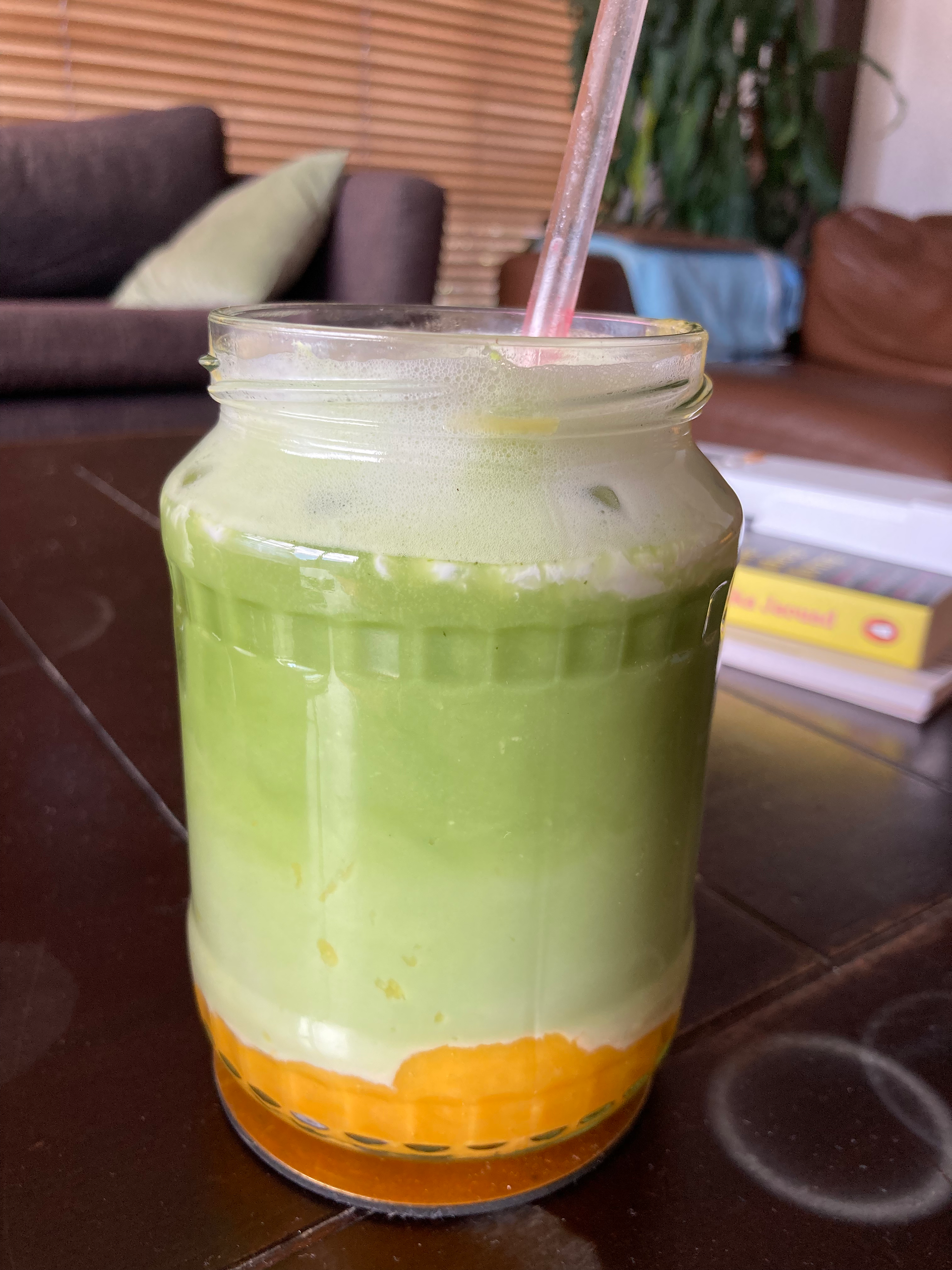
Sometimes it’s not even the juice itself. Sometimes it’s the ritual. The feeling of doing something. The tiny moment of control in a situation that feels completely out of control. And honestly, if a green juice, a smoothie, or a warm mushroom drink makes you feel comforted or grounded, I don’t think there is anything wrong with that.
As long as it doesn’t replace real food.
As long as it doesn’t become another rule to punish yourself with.
As long as you don’t start believing that one drink, powder, supplement, or protocol is the reason you will or won’t get through treatment.
One last thing I think is worth mentioning in this context: I trusted my oncology team. This is something I feel really strongly about now. There is so much content online that makes it sound like hospitals are hiding something from us, or that oncologists don’t care about root causes, or that there is some miracle cure being kept away from patients.
Looking back, trusting my team was one of the best things I did. They had seen this before. They knew how to manage nausea, constipation, diarrhea, reflux, pain, mouth sores, infections, fatigue, blood counts, all of it. Supportive care in oncology exists for a reason.
And yes, I still asked questions. I still advocated for myself. I still researched things. But I stopped assuming that every doctor was missing something that Instagram had magically figured out.
Another thing I did, was also simplifying. Taking less of something, instead of adding something.
At one point, I probably cut my supplement cupboard in half. I stopped making my wellbeing dependent on whether I had taken the perfect powder, capsule, or anti-inflammatory drink that day. (I’ll go deeper into supplements and why “more” isn’t always better in a separate post. Because this is one of those areas where fear and misinformation can get very loud, very quickly.)
And strangely, that felt like freedom. Because I got to experience real-life evidence. I got through chemo relatively well, not because of a magic pill, but because my body carried me through it. And in a way, that’s how your nervous system learns safety. Not through perfect routines or control, but through lived experiences where your body goes through something incredibly hard and still makes it through.


What I learned about fear, control, and my body
Looking back, I don’t think what got me through treatment was perfection. I think what helped me most was learning to support my body instead of constantly fearing it.
I nourished it.
I moved it when I could.
I rested when I needed to.
I trusted my medical team.
I stopped treating every meal like life or death.
And somehow, through the hardest period of my life, my body still carried me so fucken well! That doesn’t mean treatment was easy. It was probably the hardest thing I have ever gone through. I never want to experience chemotherapy again.
But I also look back with enormous gratitude for my body now. Not because it was perfect, but because it kept fighting for me even.
If you’re in this right now, I just want to say this:
I know how overwhelming it can feel. The questions, the fear, the constant feeling that you might be missing something. You’re not.
Your body is doing something incredibly hard. And getting through this doesn’t come from doing everything perfectly. It comes from getting through it, one day at a time.
And maybe that’s also why I’m writing this. Because more and more people around me are getting diagnosed. People I love. And it breaks my heart every time.
But if this helps even a little, if it takes some pressure off, then it’s worth it. 💖


Comments